Design the Museum’s 2026 Christmas card – in lino
Deadline: Monday 23 November 2026
The brief
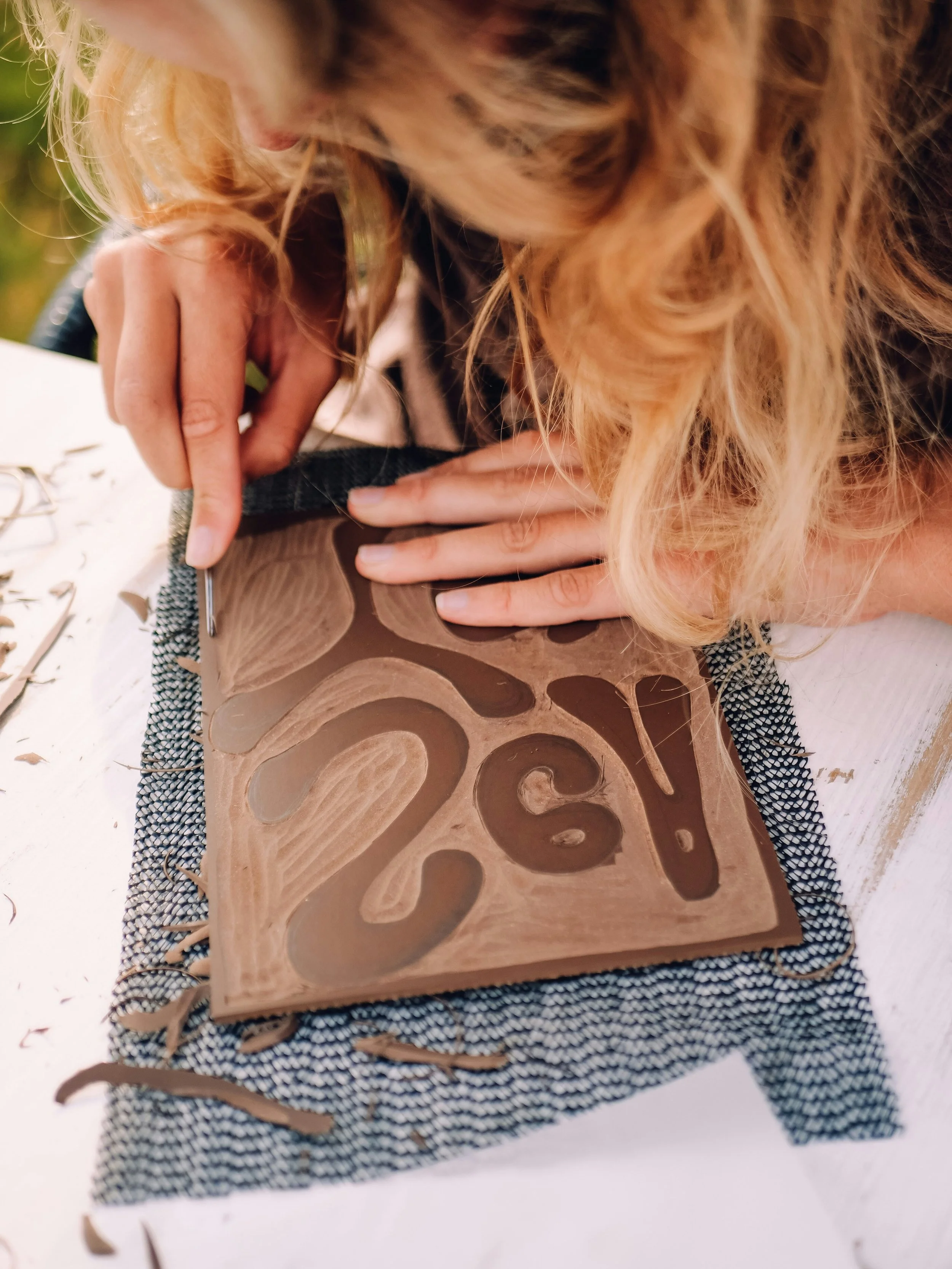
We’re looking for one linocut design to become the Cambridge Museum of Technology’s official Christmas card. The winning design is printed on our 2026 cards, sold at the Museum and through local outlets, and the artist gets a pack to send to whoever they like. We keep the winning linocut for our collection; you keep the copyright.
Any Christmas, winter, Cambridge or Cambridge Museum of Technology theme is welcome. Original work only – no AI-generated or AI-copied designs please.
Who can enter
Adults enter in their own name; children’s work is entered by a parent or guardian, or by a school or group with parental permission. One entry per designer, but one adult can submit on behalf of several children.
Lino cutting uses sharp tools. The entrant who must be over 18 is responsible for doing it safely and for supervising any child involved and adhering all applicable laws.
What to submit
The finished linocut – any lino, no larger than 100 × 150 mm
One proof printed on paper
Your name, address and phone number
If a child designed or cut it: their first name, age, and school or group if applicable
How to enter
Hand your entry in by close of business on Monday 23 November 2026 at either:
Cambridge Museum of Technology, open Friday to Sunday 10.30am-4pm
Tindalls the Stationers, open Monday to Saturday 9am-5.30pm and Sunday 11am - 4pm,
Address: 15-21 King Street, Cambridge, Cambridgeshire, CB1 1LH
Late or incomplete entries can’t be considered.
Judging and the winner
Our Chief Printer David Macfarlane will choose the winner. We’ll phone the winner and announce the result by 1 December 2026.
Non-winning entries can be collected from the Museum throughout December; anything left after Sunday 27 December may be disposed of so please collect it before then if you would like it back!
Terms and conditions
The competition is run by the Cambridge Museum of Technology (registered charity no. 1156685).
Entries must be submitted by an adult aged 18 or over (the entrant). The design, and the cutting of the lino, may be by the entrant or by someone under 18. Where a child is involved, the entrant must be the child’s parent or guardian, or must include with the entry written permission from the child’s parent or guardian. Schools and groups are welcome to enter on this basis. Trustees, staff of the Museum, and staff of Tindalls, may not enter.
Lino cutting uses sharp tools. The entrant is responsible for how the linocut is produced, including the supervision and safety of any child who takes part. The Museum and Tindalls do not supervise the making of entries and accept no liability for injury or damage arising from it, except where the law does not allow liability to be excluded.
Entry is free and no purchase is necessary. Any lino may be used, up to a maximum size of 100 × 150mm.
Each entry must include the finished linocut, one proof printed on paper, and the entrant’s name, address and phone number. If a child designed or cut the entry, include their first name and age, and the name of the school or group if there is one. One entry per designer. An adult may enter work by more than one child.
Entries must be delivered by hand to the Museum or to Tindalls the Stationers Ltd (“Tindalls”) by close of business on Monday 23 November 2026. Late or incomplete entries will not be considered.
The design must be the original work of the entrant, or of the child whose work they are entering, and must not copy or infringe anyone else’s work. Designs generated by AI, or copied from AI-generated images, are not eligible.
The winner will be chosen by the judge, whose decision is final. The winner will be contacted by phone and announced by 1 December 2026.
The designer keeps the copyright in their design. By entering, the entrant grants the Museum permission to reproduce the winning design on Christmas cards in 2026 and future years, to sell those cards itself and through any retailer or other outlet it chooses, and to use the design, and allow others to use it, in publicity for the competition and the cards. Where the design is by a child, the entrant confirms that the child’s parent or guardian has agreed to this. The winning linocut will be kept by the Museum. The entrant will receive a pack of the printed cards.
Non-winning entries can be collected from the Museum during December 2026. Entries not collected by Sunday 27 December 2026 may be disposed of.
We take care of all entries but cannot accept responsibility for loss or damage.
Entrants’ contact details, and any details of children, will be used only to run the competition and will be deleted once it has closed. When the winner is announced, an adult designer will be named. A child will be named only by first name and age, and only if their parent or guardian agrees.