Community Heritage Day: Celebrating Abbey and Chesterton
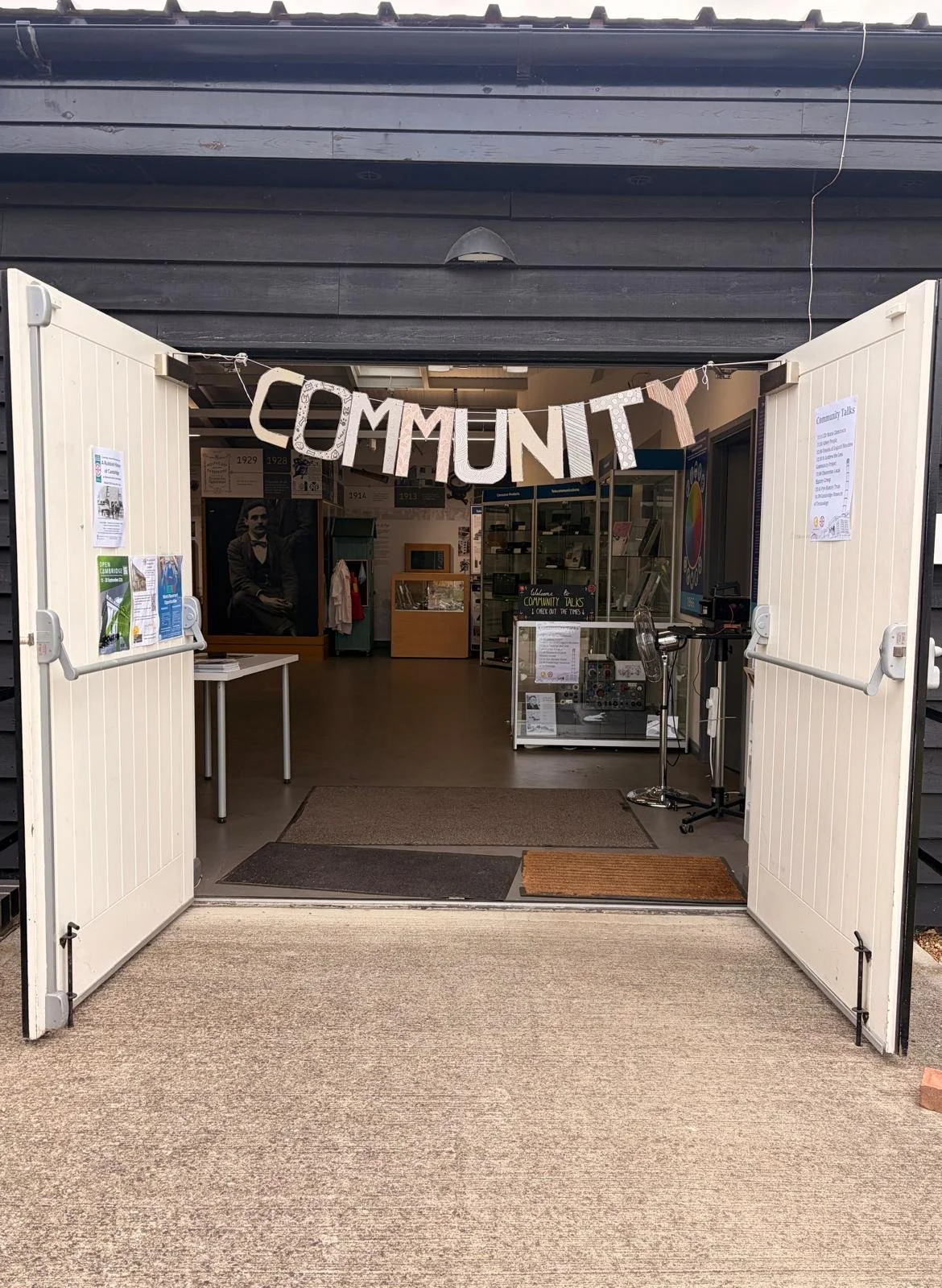
On Saturday 19th September, Cambridge Museum of Technology hosted Community Heritage Day, celebrating the interconnected history, nature, and people of Abbey and Chesterton wards. Organised by our Community Forum, the event brought together nearly 400 visitors to explore the shared heritage that binds these two riverside communities.
Bridging communities across the river
Abbey and Chesterton share a distinctive history - closely linked yet geographically separated by the River Cam. Community Heritage Day was designed to build meaningful connections across this divide, celebrating both the people who live here and the rich industrial heritage that connects them. The Museum's location in Abbey ward, combined with its extensive collection of Chesterton industrial history, including the Pye Museum, made it the ideal venue for this celebration.
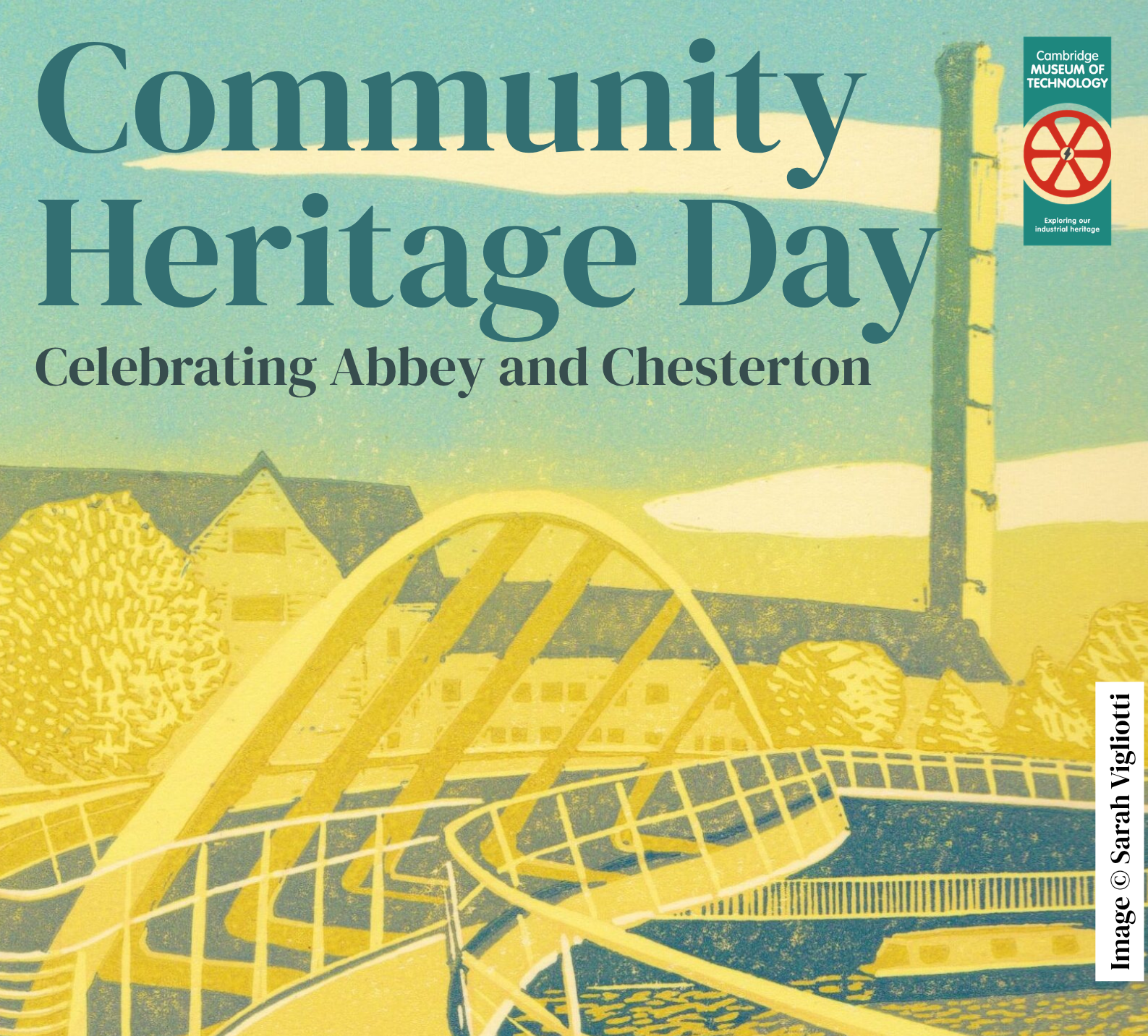
The event poster, created by volunteer Sarah Vigliotti, captured this theme perfectly, featuring the Equiano Bridge, one of many bridges linking the two wards and located directly in front of the Museum.
Opening remarks and community recognition
The day opened with a presentation from East Chesterton Women's Institute to Councillor Maria Cleminson, Mayor of Cambridge and a member of our Community Forum. They expressed thanks to the City Council for recognising the Rights of the River Cam – a motion that will help protect the river's continued flow for generations to come.
East Chesterton Women’s Institute presenting Cllr Maria Cleminson with a thank you card.
A day of discovery
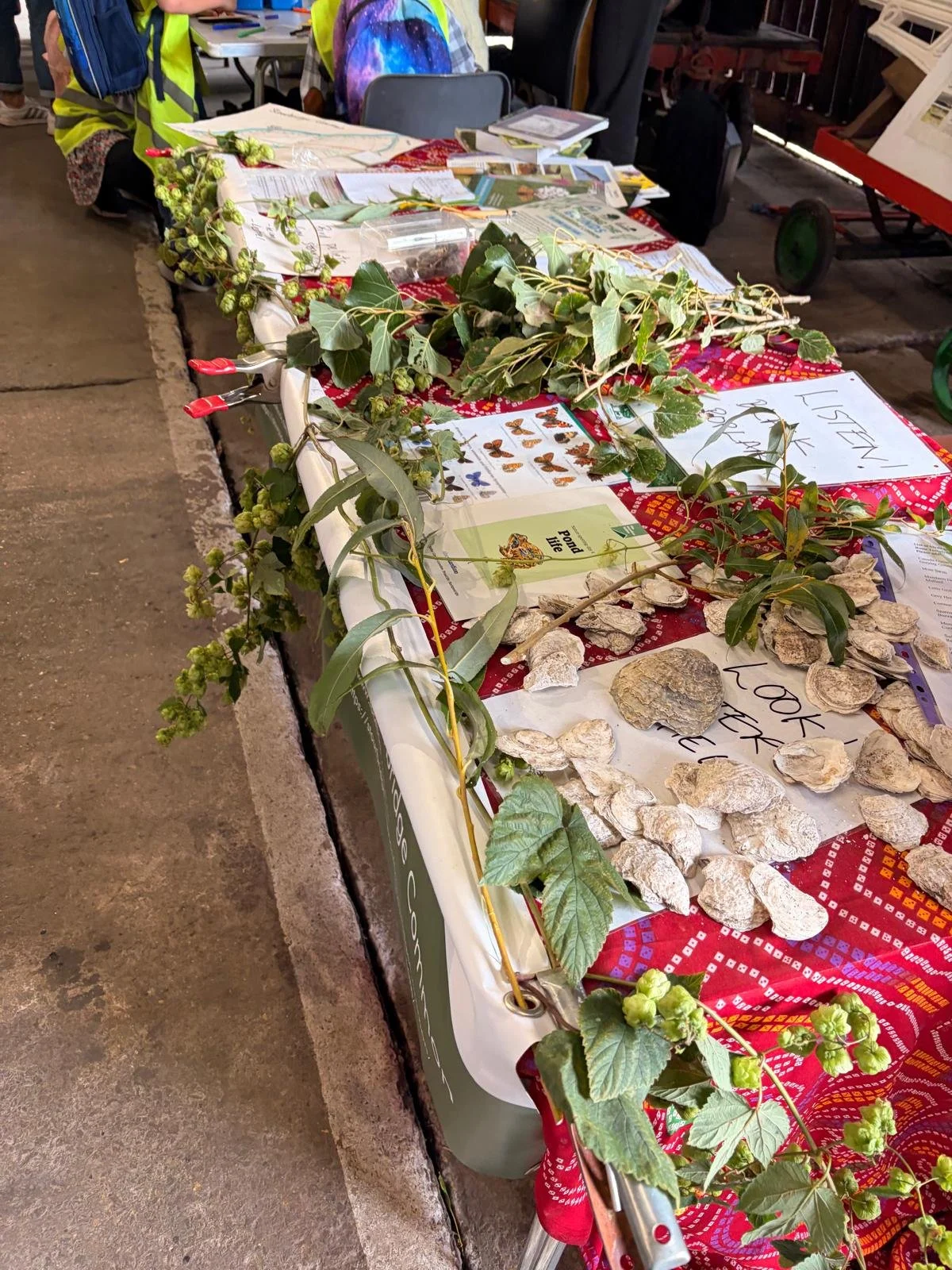
Throughout the site, visitors encountered a diverse programme of activities and engagement:
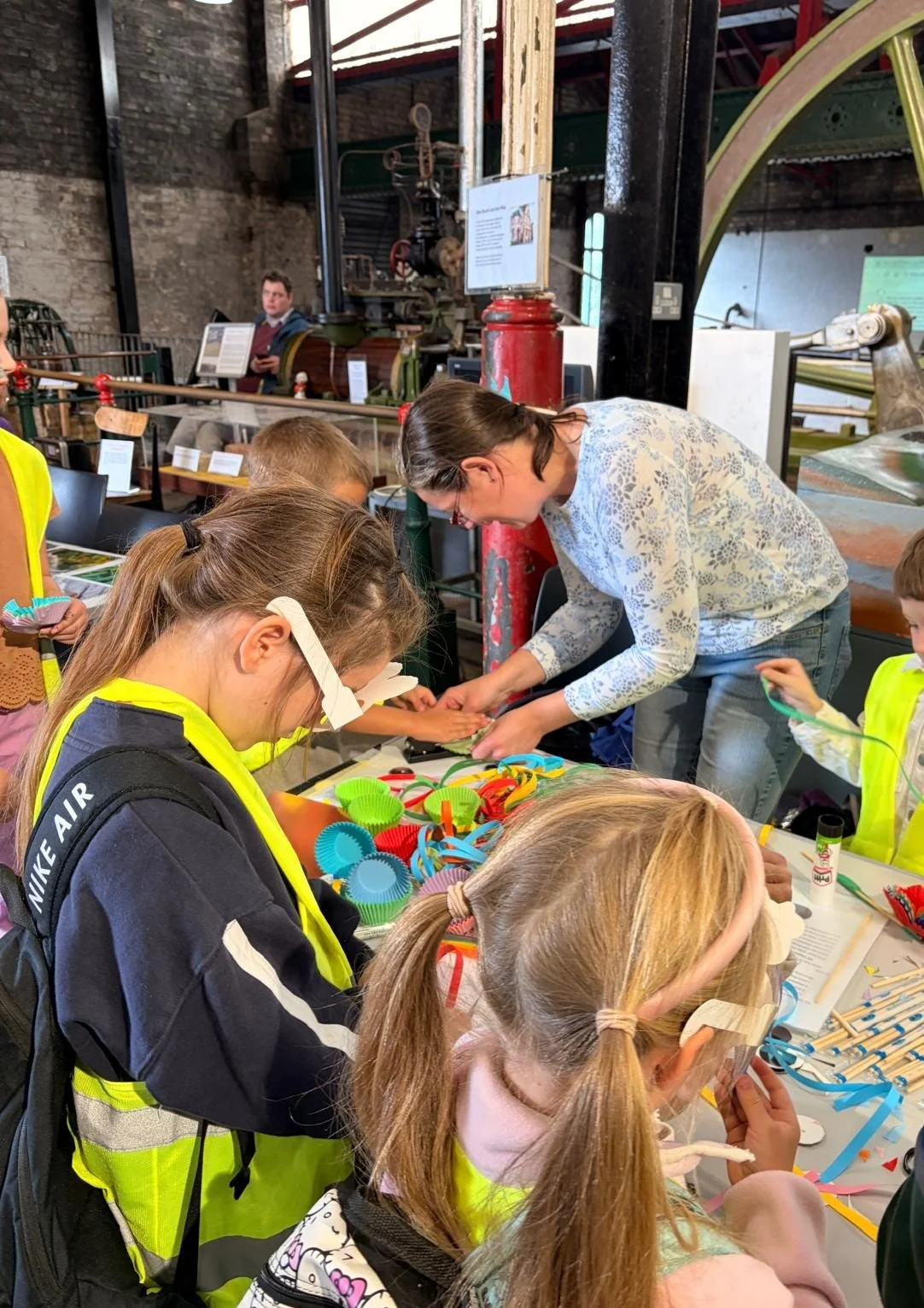
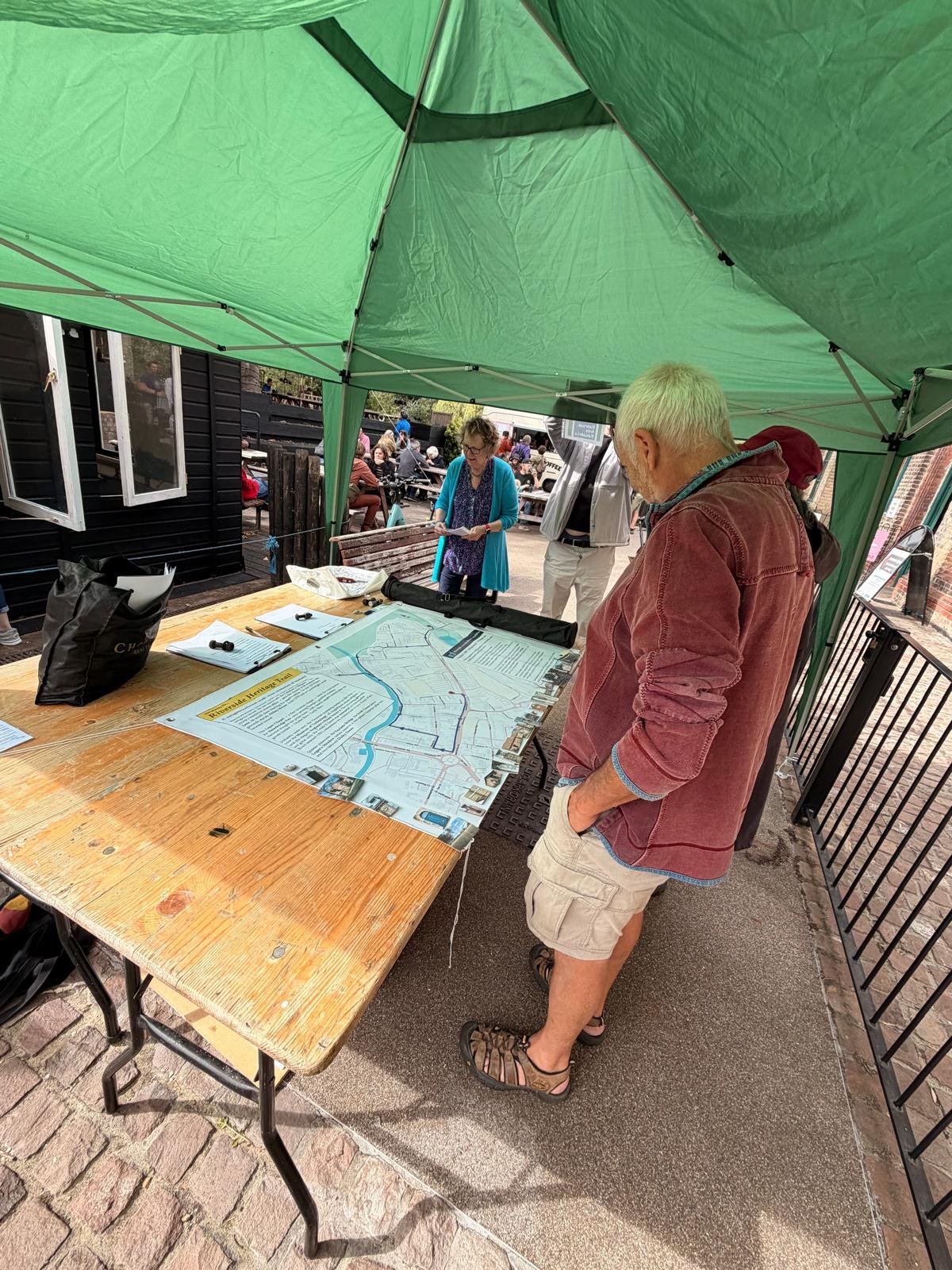
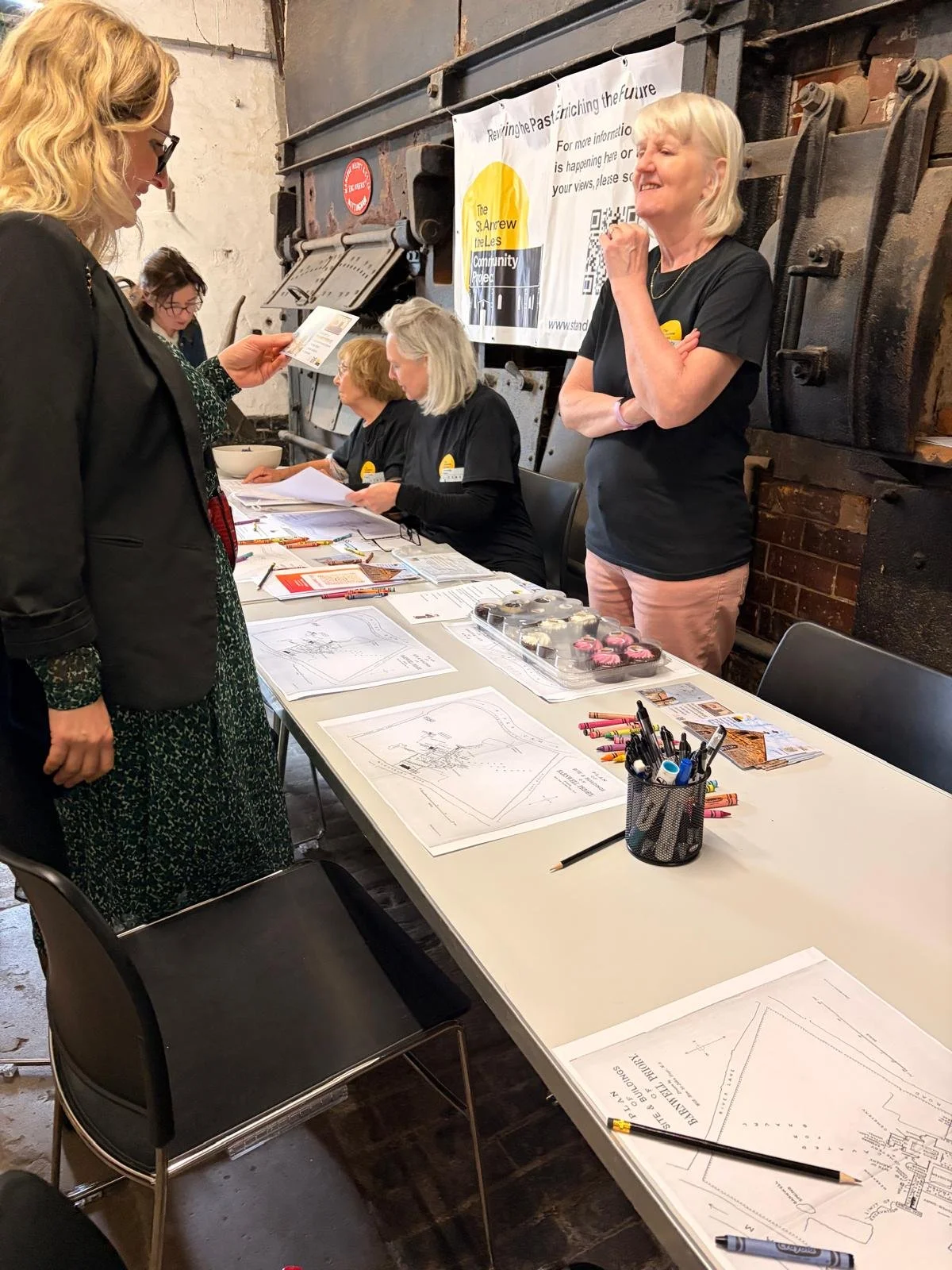
Interactive stalls featuring children's activities, including pin-the-historic-landmark-on-the-map
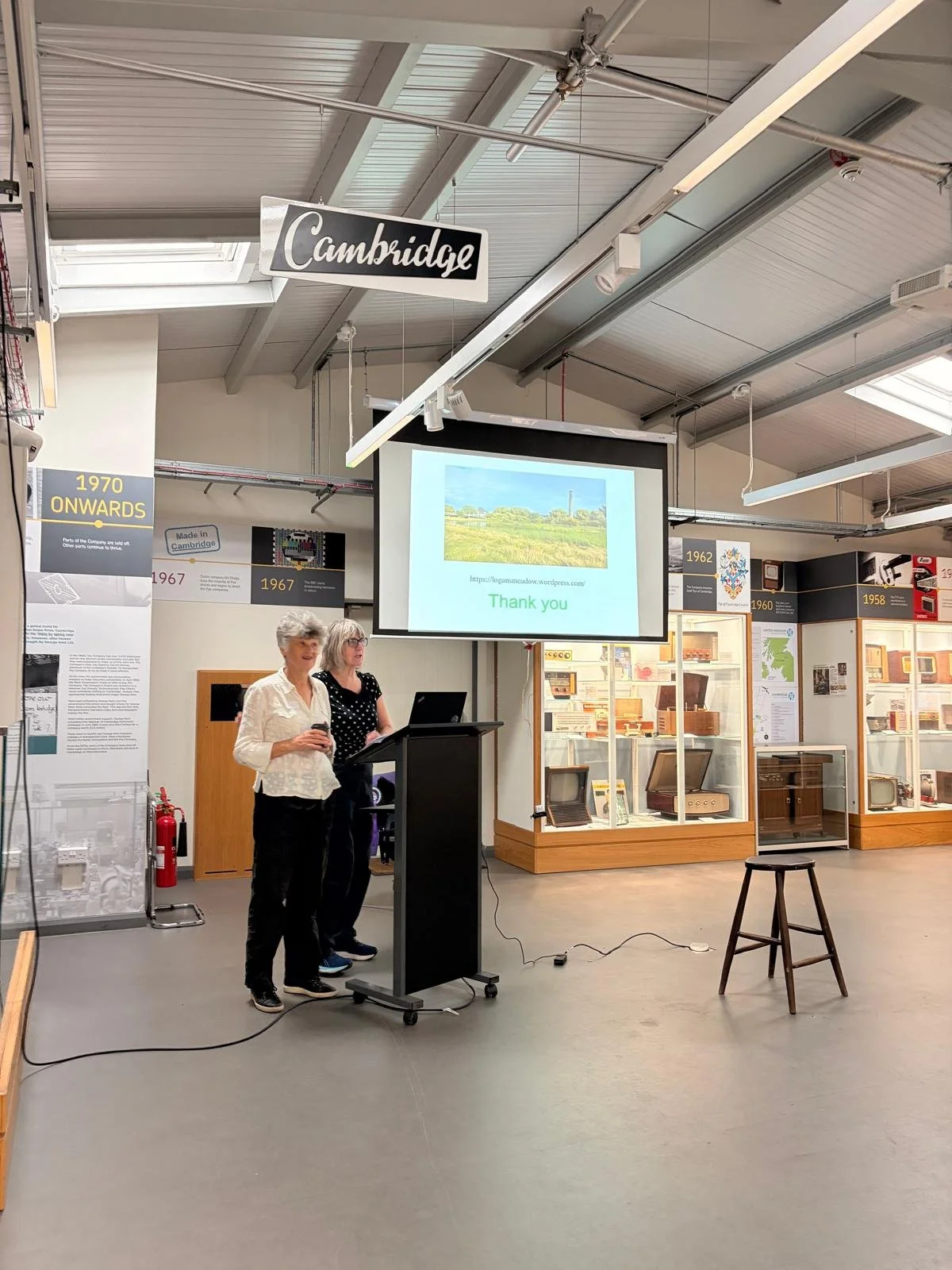
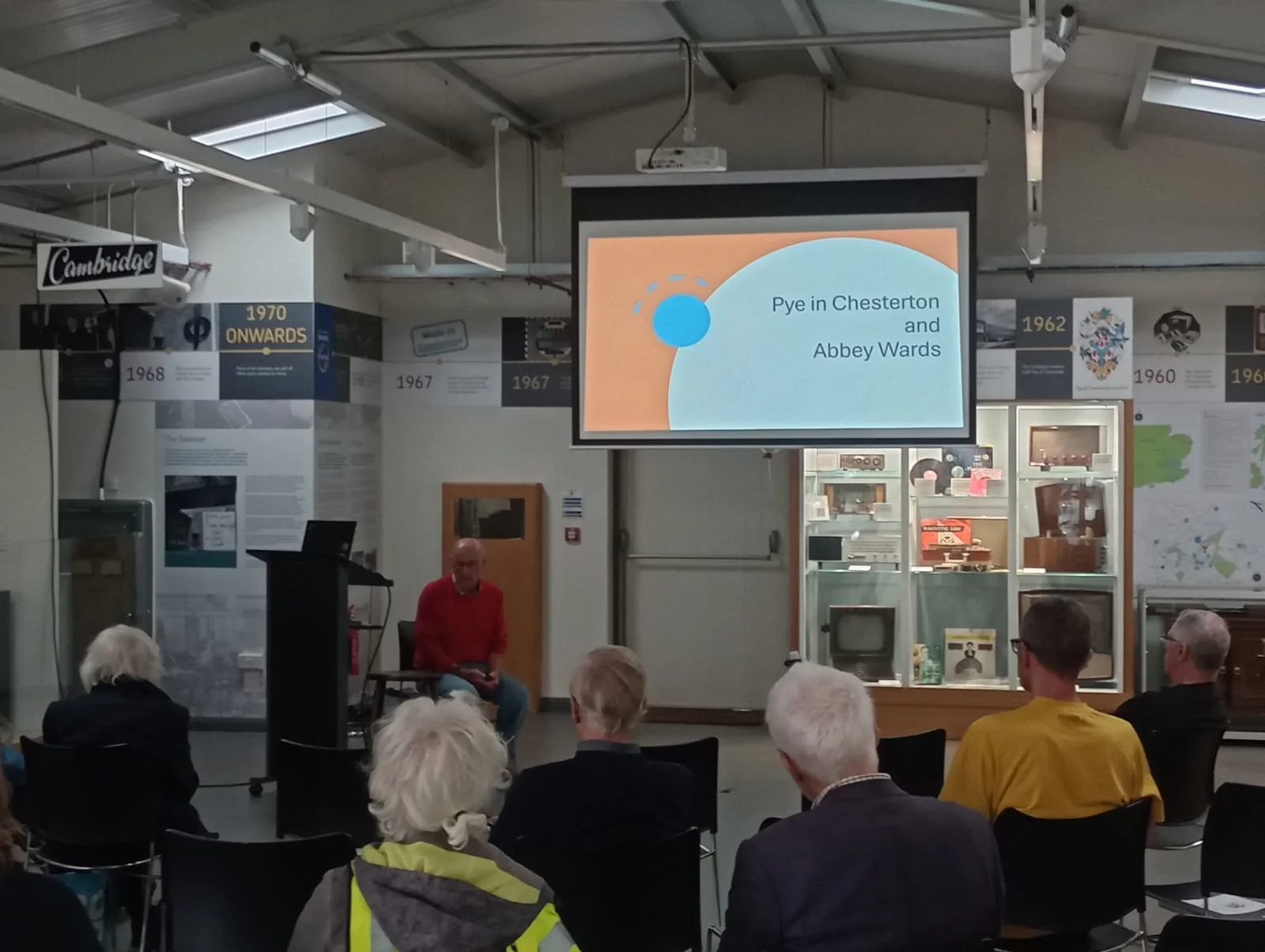
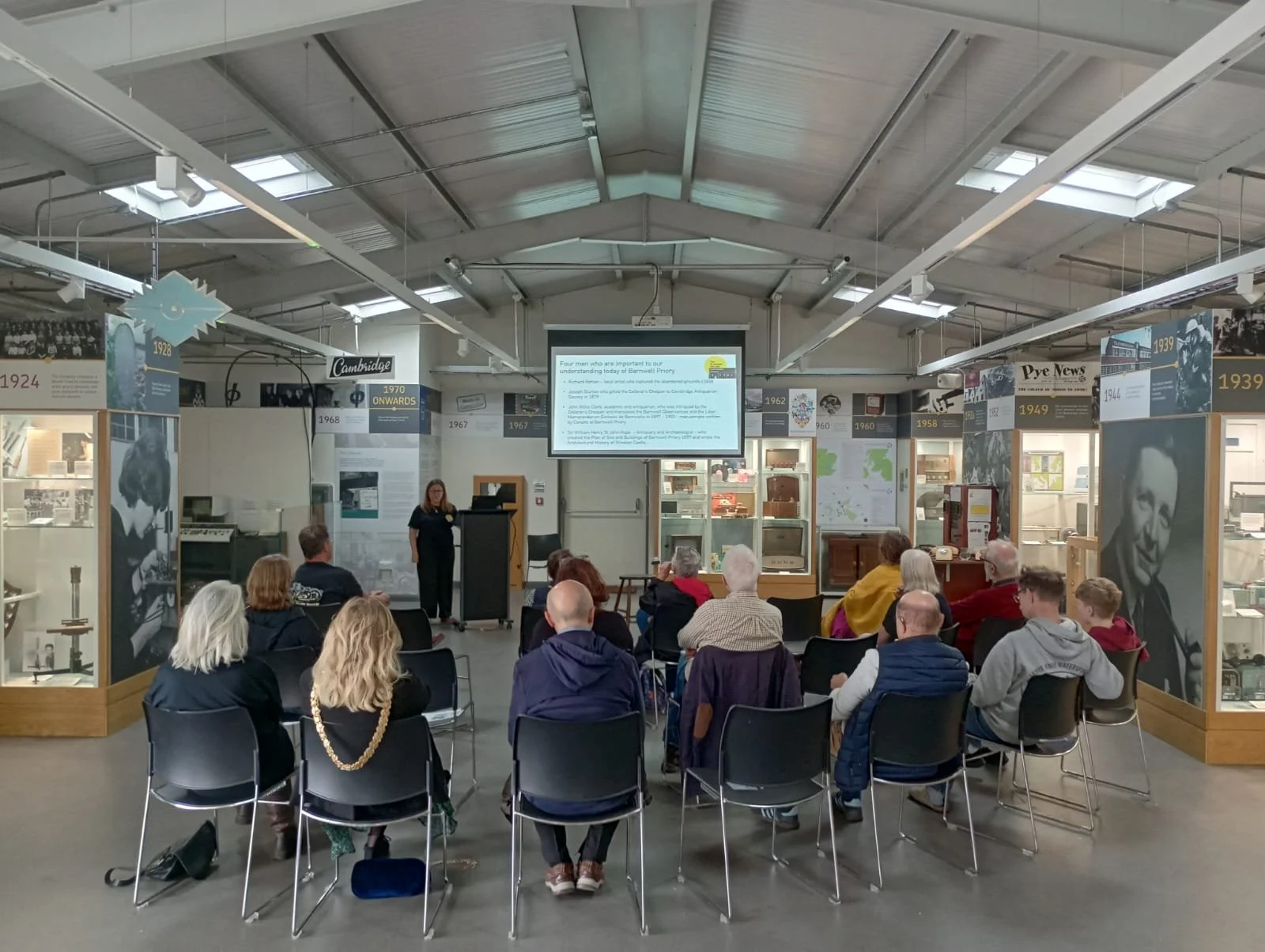
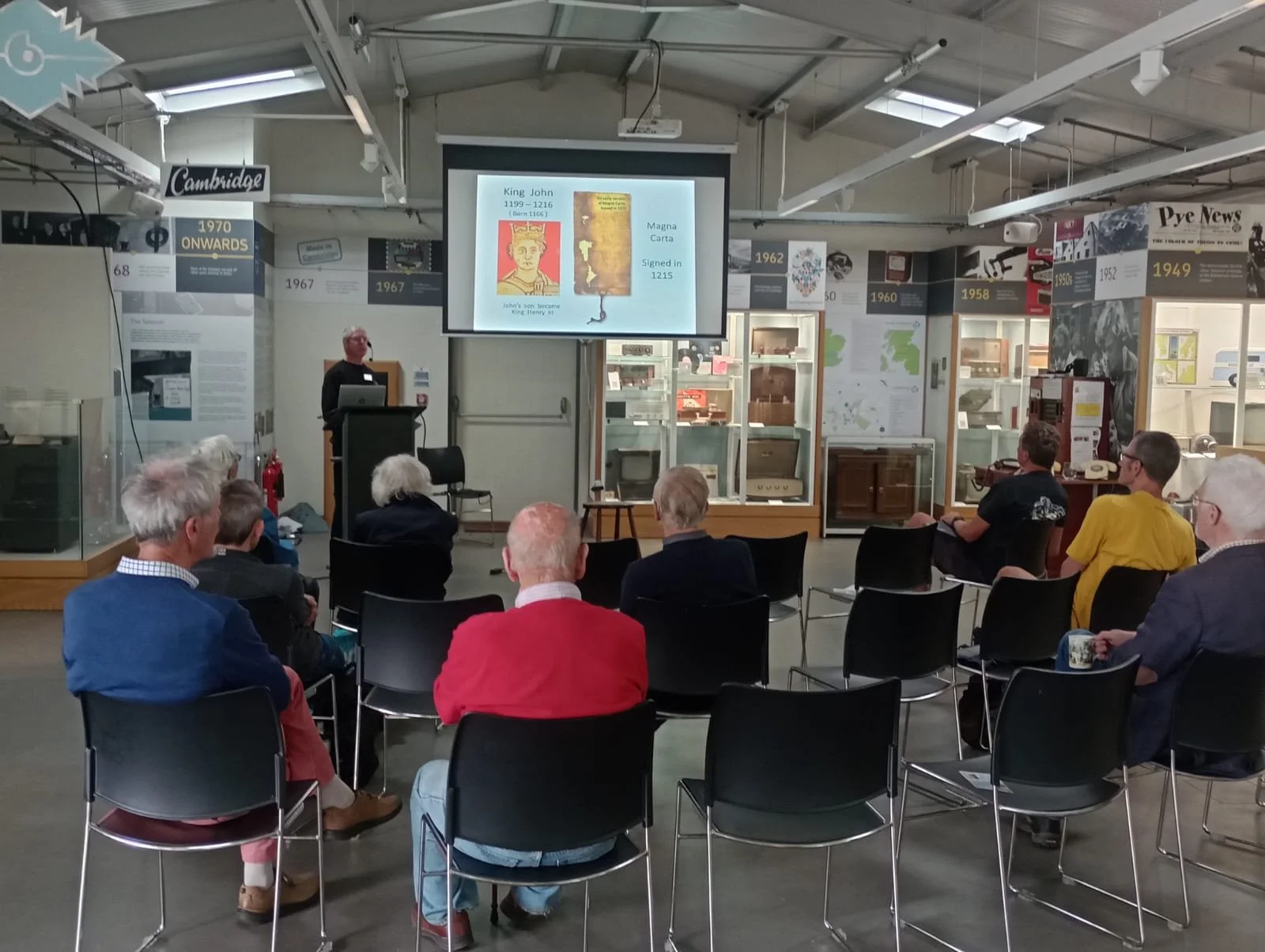
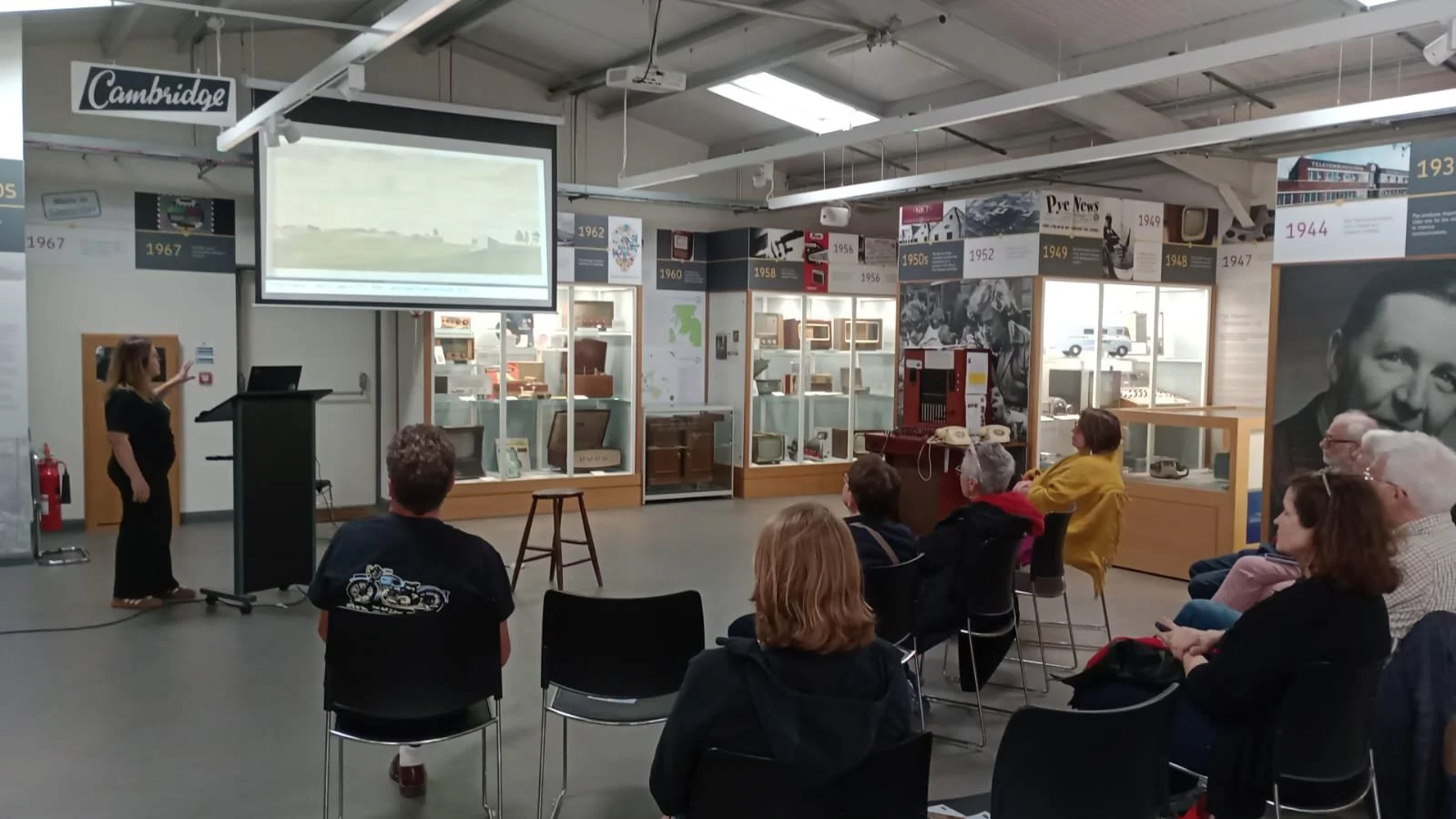
Talks and presentations in our Pye Building, offering deeper insights into local history and the work of community organisations
An immersive soundscape created by James M Errington, creator of Centuries of Sound, which evoked the industrial sounds of Cambridge and immersed visitors in the history of the pumping station and its surrounding areas
Community partnership at its heart
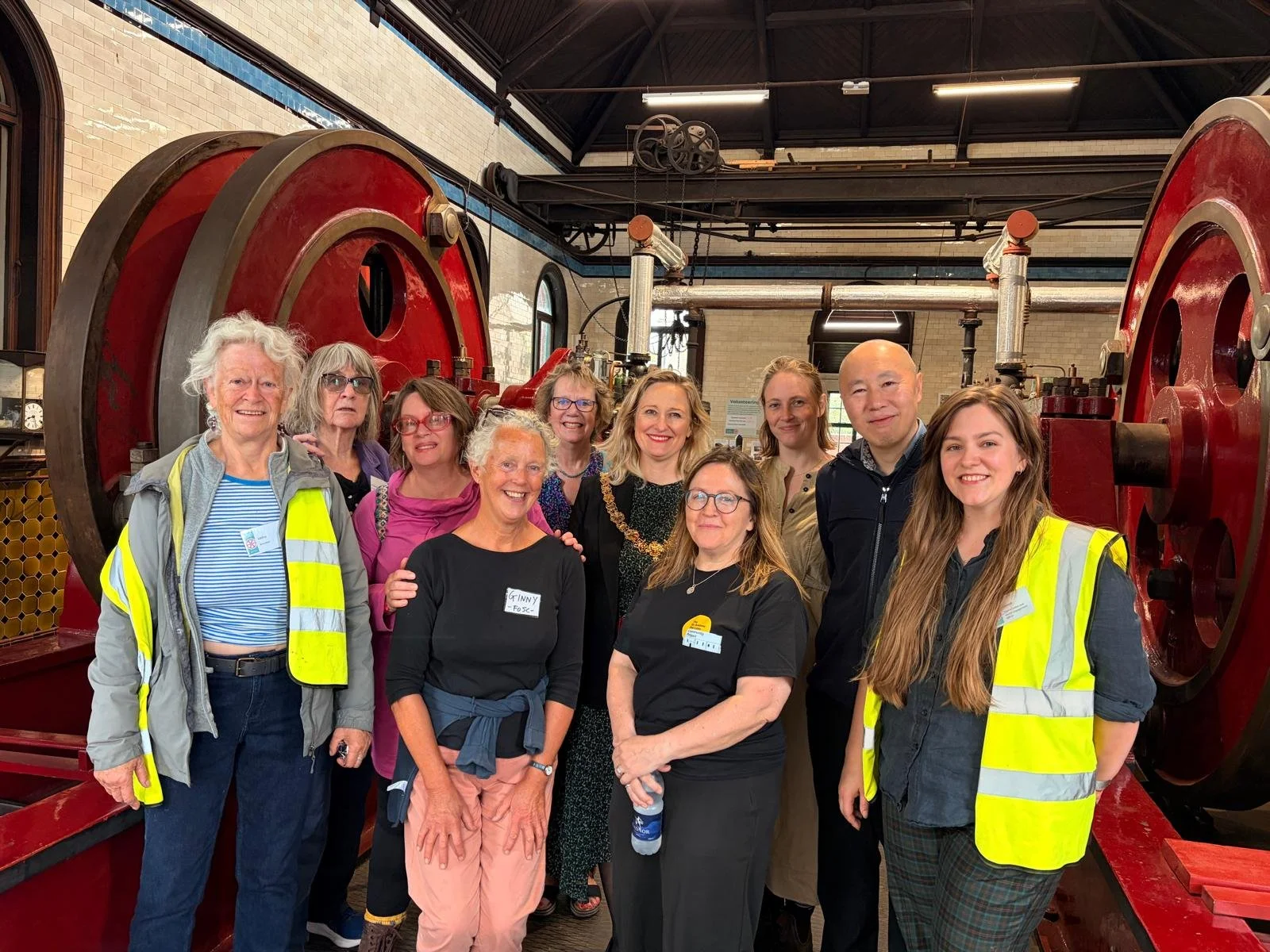
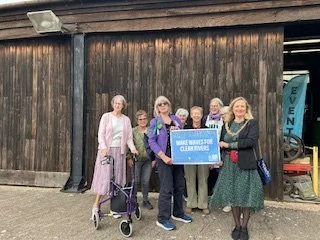
Members of CMT’s Community Forum. L to R: Lesley Nichols, local resident; Elizabeth May, East Chesterton WI and Friends of Logan’s Meadow; Anne French, CMT Trustee; Ginny Morrow, Friends of Stourbridge Common; Caroline Nevile, Riverside Area Residents’ Association; Cllr Maria Cleminson, Mayor of Cambridge, Riverside Area Residents’ Association and St Andrew the Less Community Project; Anne Sheedy, Riverside Area Residents’ Association and St Andrew the Less Community Project; SJ Fox, CMT Trustee; Vincent Mak, CMT Trustee (Chair); and Joanne Hamilton, CMT’s Communities and Visitor Engagement Officer.
Community Heritage Day was made possible through the collaboration of the CMT Community Forum – a group of community champions who meet quarterly to discuss local matters and share news from throughout the area. Forum members represent:
Riverside Area Residents' Association
St Andrew the Less Community Project
Friends of Stourbridge Common
Friends of Logan's Meadow
East Chesterton Women's Institute
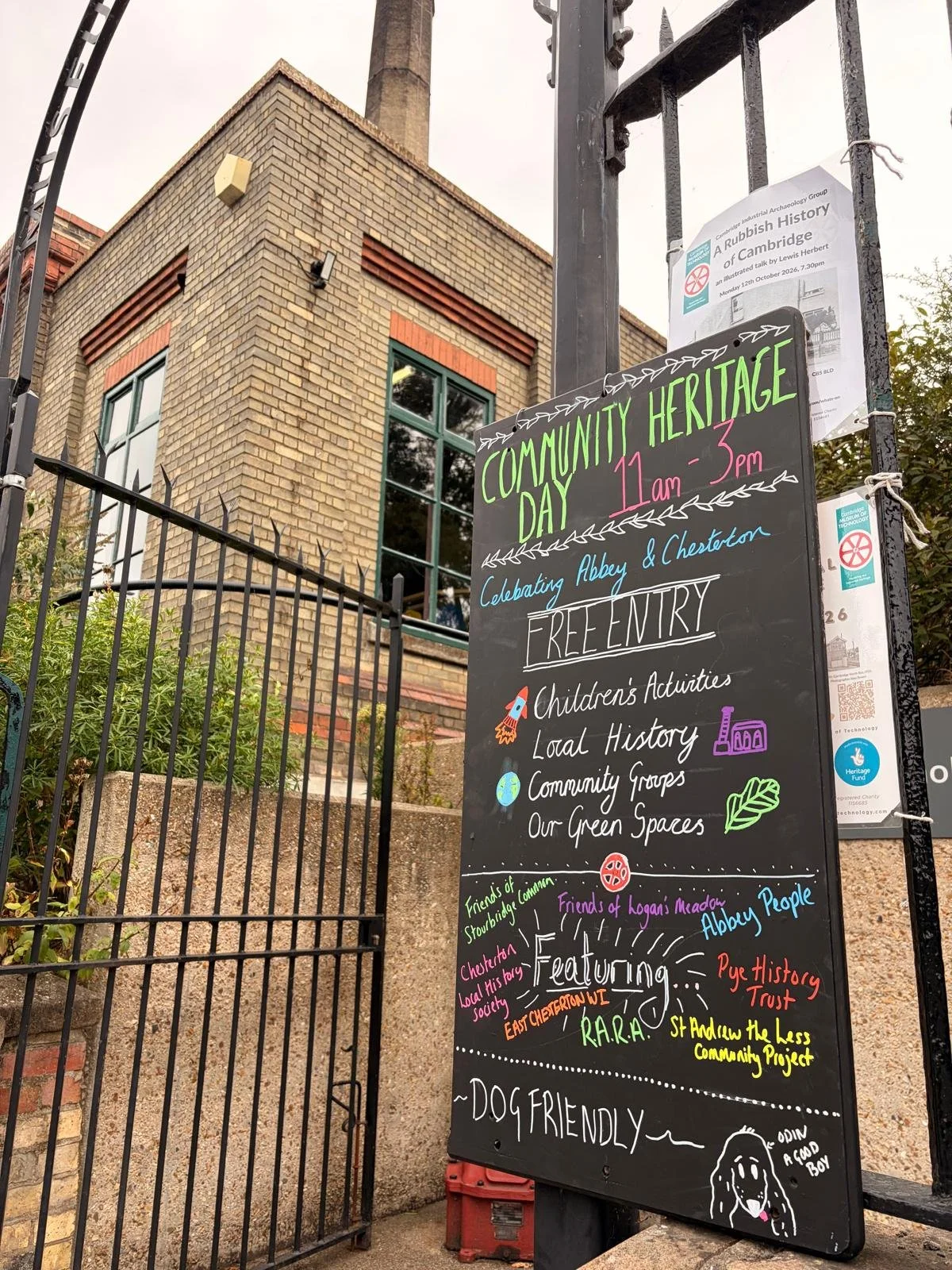
The event also welcomed partners including Abbey People, Cambridge Industrial Archaeology Group, Pye History Trust, and Chesterton Local History Group.
Part of a wider movement
Community Heritage Day was part of Open Cambridge, a local initiative within the national Heritage Open Days programme, which encourages people to discover and engage with areas of their local community they might not have explored before.
Groups Featured at Community Heritage Day:
A vibrant community charity in the Abbey Ward of Cambridge, improving the lives and wellbeing of Abbey residents.Theydo this through targeted community projects, provision of general support such as a community Food Hub, supporting access to education and employment, projects to improve the environment,and by developing a culture of volunteering in the community.
Cambridge Industrial Archaeology Group
Cambridge Industrial Archaeology Group studies and records our local industrial heritage. They meet at Cambridge Museum of Technology where they host talks programme, which embraces industries from across the world, from earliest times to the present day.
Chesterton Local History Group
A local group dedicated to sharing the history of Chesterton and its surrounding areas.
East Chesterton Women’s Institute
A branch of the Women’s Institute representing East Chesterton. The Women’s Institute sets out to give women a voice and to be a force for good in their communities.
Friends of Logan’s Meadow is a voluntary organisation which supports the expansion and improvement of Logan’s Meadow Local Nature Reserve in Cambridge.
Stourbridge Common in Cambridge is a part of the rich history of Cambridge. It is widely used by many people – it is a green space worth preserving and maintaining – to that end, the Friends of Stourbridge Common was launched in September 2009.
The Pye History Project is an industrial, technical and social history program to research, document and record the history of the Pye Group of Companies between 1896 and the present day. The long-term objective of the project is to establish or participate in a public museum which will adequately interpret and display the full extent of the scientific and technological discoveries and innovations which originated in Cambridge and the surrounding area. The Pye Group was always headquartered in Cambridge, England.
Riverside Area Residents’ Association
The local residents association representing Riverside, our closest neighbours and friends.
St Andrew the Less Community Project
St Andrew the Less in Cambridge is the 13th-century church on Newmarket Road, not far from the Elizabeth Way Roundabout, set back a little from the street, behind a row of scraggly trees and bushes. It was built by Barnwell Priory's Augustinian Canons for the people that had moved to the area to provide for the foundation.
The St Andrew the Less Community Project exists to conserve and revitalise this historic 13th-century church and its churchyard, creating a sustainable space that celebrates community, heritage, and biodiversity.